How to Dig a Bass Pond the Right Way: A Louisiana Pond Digging Progress Update
Looking for a pond digging contractor in Louisiana? Here's a real look at what goes into building a bass pond that actually produces good fishing, straight from a current job.
If you've ever thought about hiring someone to dig you a pond and figured "how hard can it be, just dig a hole and let it fill up with water," we're here to tell you it's a lot more involved than that. We're in the middle of a pond digging project right now, and it's a good example of what actually goes into building a pond that's going to hold good fish for years to come, not just a hole that fills up with water.
What size excavator do you need to dig a pond?
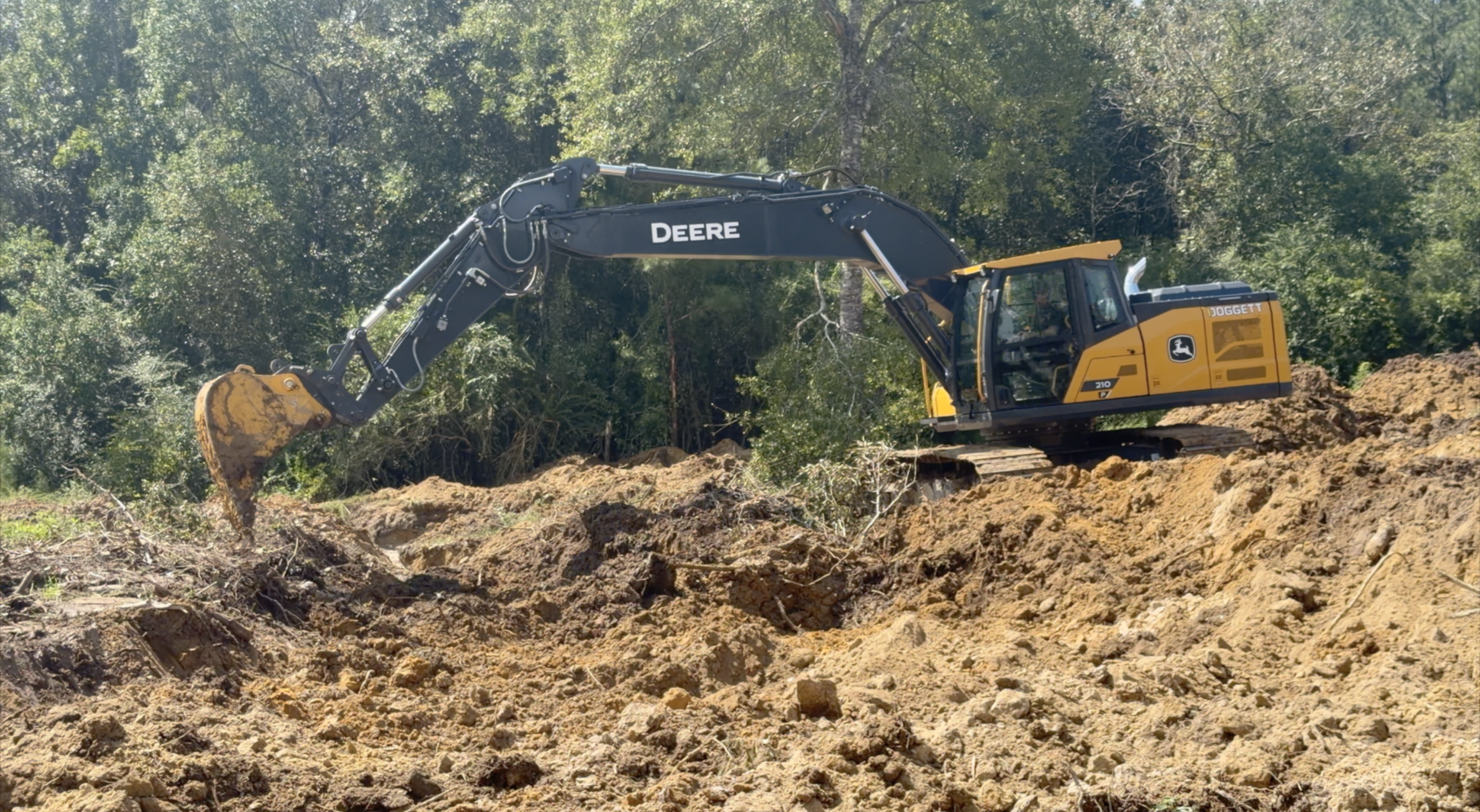
On this job we've been running two different sized excavators, a 135 and a 210, side by side to compare how they handle pond digging work. The 135 got the job done, but once we got in here moving dirt with the 210, the difference in efficiency was obvious. We're planning on adding the 210 to our equipment lineup because of it. Excavator size matters a lot when you're digging a pond, since bigger equipment can move more dirt faster and dig deeper without as many passes.
When a tree changes your pond digging plans
Early on, we dug out the pond basically by eye and figured the water level would land about where we wanted it. But there was a tree on the property that changed things. We wanted to save that tree so the customer has a nice shady spot to fish from, and that meant the water level needed to work around where the tree sits.
After running the laser level on it, we realized the area was too shallow for what we needed. So we went back in and dug it out deeper, cutting a valley down through that section of the pond. It's a good reminder that digging a pond isn't something you just eyeball and walk away from. Little adjustments like this are part of getting it right, and it's one of the reasons hiring an experienced pond builder pays off.
Building a spawning flat for bream and bluegill
Down in one section of the pond, we're working on a flat area, somewhere in the 4 to 6 foot range, that's going to serve as a spawning area. Bass will spawn along the shoreline pretty much anywhere, but bream and bluegill need a good flat area to spawn in. That matters more than people realize, because those bream are one of the main forage sources for the bass in the pond. A pond that's good for bream is a pond that's going to grow good bass.
Adding structure: a channel, stumps, and a deep hole
We also dug a channel down the middle of the pond, and we're placing some big stumps we pulled out during clearing into different spots throughout the pond. Those stumps create cover for fish, giving them places to hold and ambush points to hunt from.
Then there's the deep hole, which we dug about 20 feet down. We dug as deep as we could from the bank, then got the excavator down in there to finish it out. A deep hole like this matters most in the heat of summer. When the water up top warms up, fish can drop down into that deeper, cooler water where oxygen levels hold up better.
Why pond design matters more than just digging a hole
You can't just go dig a hole and call it a pond. Building a pond that actually produces good fishing takes some knowledge of what these fish need at every stage, from spawning to summer heat. That's the kind of thing we pay attention to on every pond we dig, because we want to make sure the customer ends up with a pond they're proud of, not just a hole full of water.
This one isn't finished yet, but it's getting close. We'll keep you posted as it comes together.
Looking for someone to dig you a pond in Louisiana? Give us a call and we'll come take a look at your land and talk through what it would take to build you a pond that's actually set up for good fishing.
A House Pad Is More Than a Pile of Dirt
If you're getting ready to build a house, a shop house, a barndominium, a camp, or even setting up a mobile home , one of the first questions you'll run into is what needs to happen to the land before anyone can pour a foundation or set a home on it. A lot of people assume the answer is "just bring in some dirt." It's a little more involved than that, and knowing what actually goes into a house pad can save you time, money, and headaches once construction starts.
It starts with what's already there
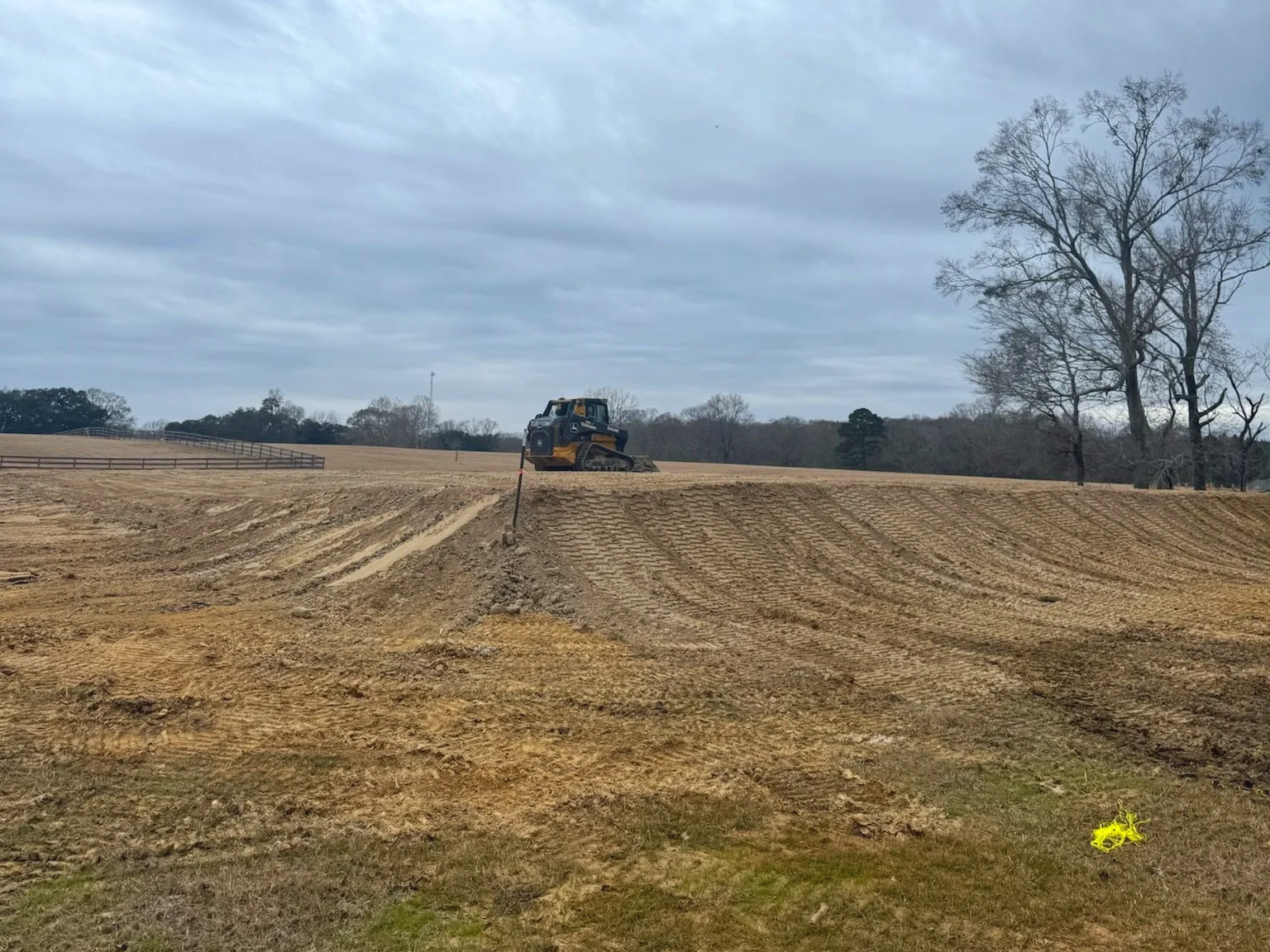
Before any dirt gets added, the site has to be looked at. That means clearing whatever's on the property: brush, trees, stumps, and figuring out what's underneath. A lot of land in South Louisiana and Southwest Mississippi has topsoil that isn't suitable to build on. It's too soft, holds too much water, or just won't compact the way it needs to. That layer typically has to be stripped off before anything else happens, or you end up building on ground that shifts and settles later.
Fill dirt isn't just fill dirt
Once the site is stripped, fill material gets brought in and placed in the area. But it's not just dumped in one big pile — it goes in layers, usually called lifts, with each layer compacted before the next one goes on top. Skip that step, or rush it, and you can end up with a pad that looks fine on day one but settles unevenly once there's weight on it. That settling is exactly what causes cracked slabs, doors that stick, and drainage problems down the road.
Elevation and drainage matter as much as the dirt itself
Getting the pad to the right elevation isn't just about height for the sake of height — it's about where water goes once it rains. South Louisiana gets a lot of rain, and a pad that isn't graded correctly can leave water sitting against a foundation or running toward the house instead of away from it. Good site prep accounts for drainage from the start, not as an afterthought once someone notices standing water.
Where a house pad contractor's job ends
There are parts of this process that fall outside what a site-prep contractor should be doing. Soil testing, engineering, surveying, and foundation design are their own disciplines, and they matter — especially on land that's known to be low, wet, or has questionable soil. If a property needs a soils engineer to sign off on compaction, or a surveyor to establish exact elevations and boundaries, that's work for those professionals. A contractor who tells you they can handle everything, including things outside their scope, isn't doing you any favors.
Why it's worth getting right the first time
The foundation contractor or builder who comes in after site prep is trusting that the pad underneath them is solid, properly compacted, and at the right elevation. If it's not, problems don't show up right away. They show up months or years later, and by then they're a lot more expensive to fix than they would have been to prevent.
What this looks like with Louisiana Land Pros
We handle house pad prep from clearing through grading. Stripping unsuitable material, hauling and placing fill, compacting it in lifts, and setting the pad up with drainage in mind. Most house pads take anywhere from a couple of days to about a week, depending on the size of the property and what's involved. We'll coordinate directly with your builder or foundation contractor on timing if that's helpful, and if a soils engineer or surveyor needs to be brought in first, we'll tell you that up front rather than pretend it's not needed.
Every property is different, which is why we don't quote house pad pricing without seeing the site. If you're planning to build and want to know what your land actually needs, give us a call or send us a message and we'll come take a look.
Louisiana Land Pros | Serving St. Francisville, West Feliciana, Zachary, Clinton, Jackson, Baton Rouge, and surrounding parishes and counties Call or text: 225-715-9745 | louisianalandpros@gmail.com | louisianalandpros.com
What to Do When a Storm Drops a Tree on Your Property
If you live anywhere between Woodville and Baton Rouge, you already know South Louisiana doesn’t go long without a good storm. Heavy rain, high wind, the occasional hurricane threat - it’s part of living here. And when the weather gets bad enough, it’s not unusual to walk outside afterward and find a tree laid across your driveway, yard, or fence line.
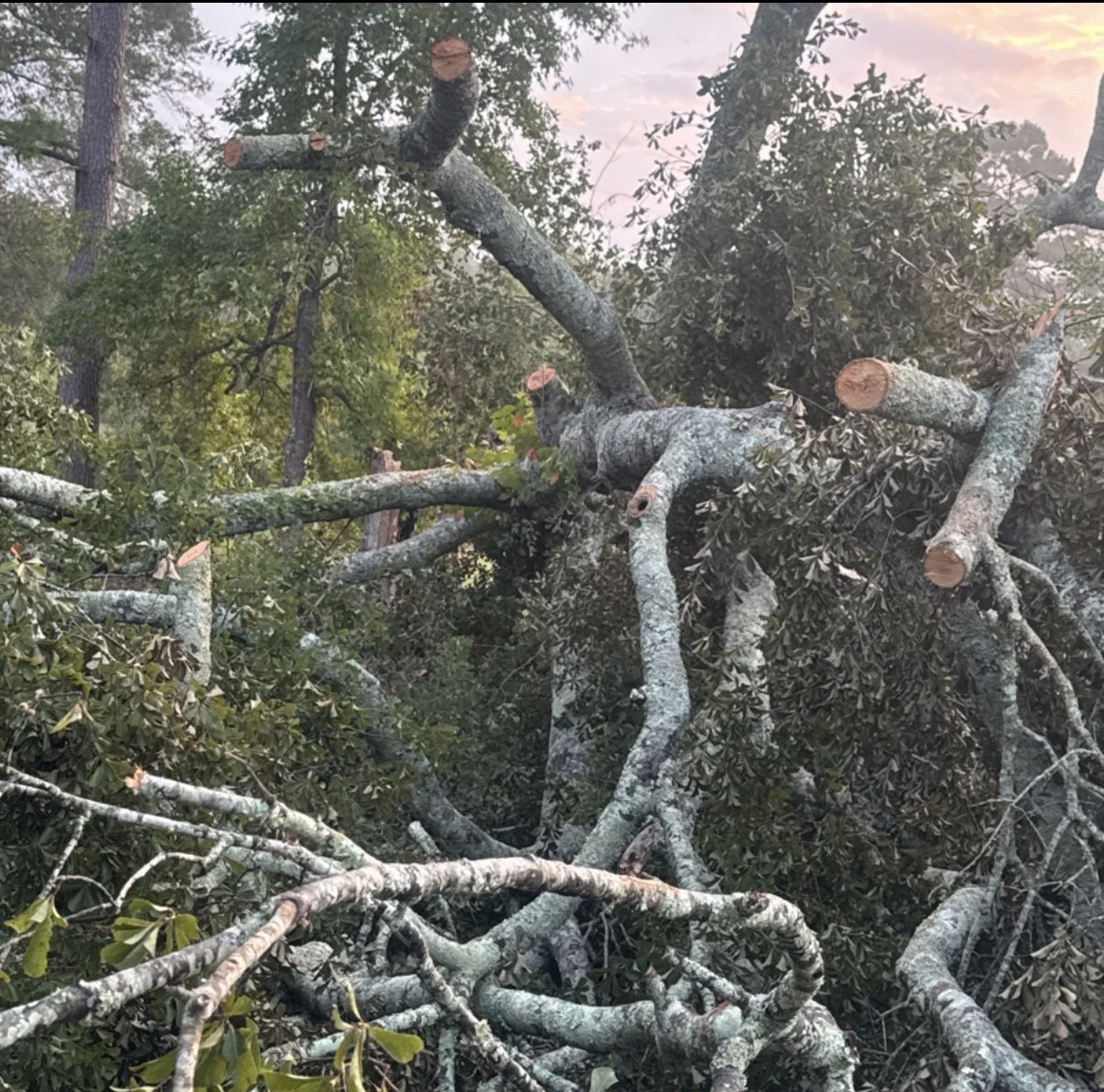
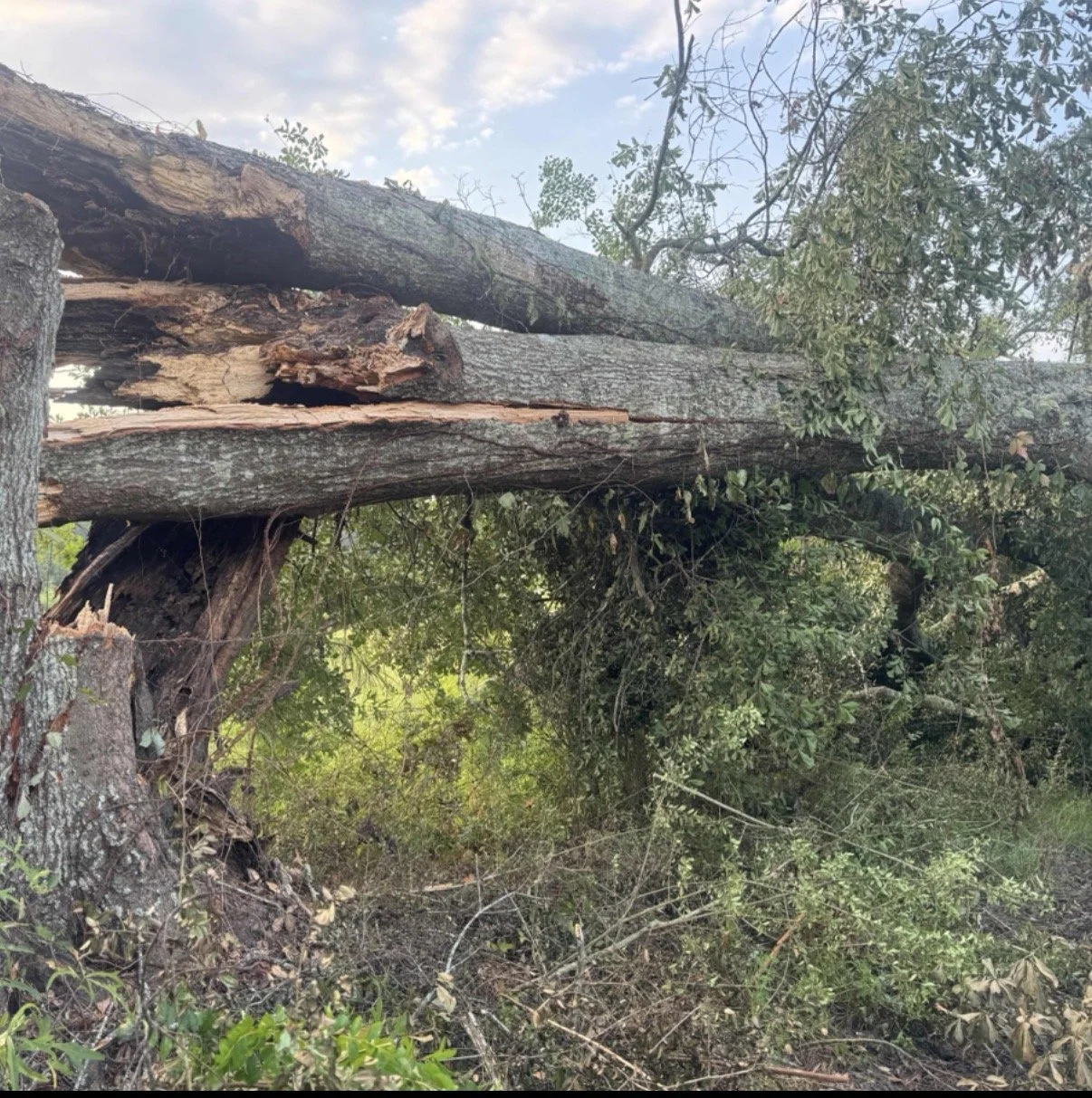
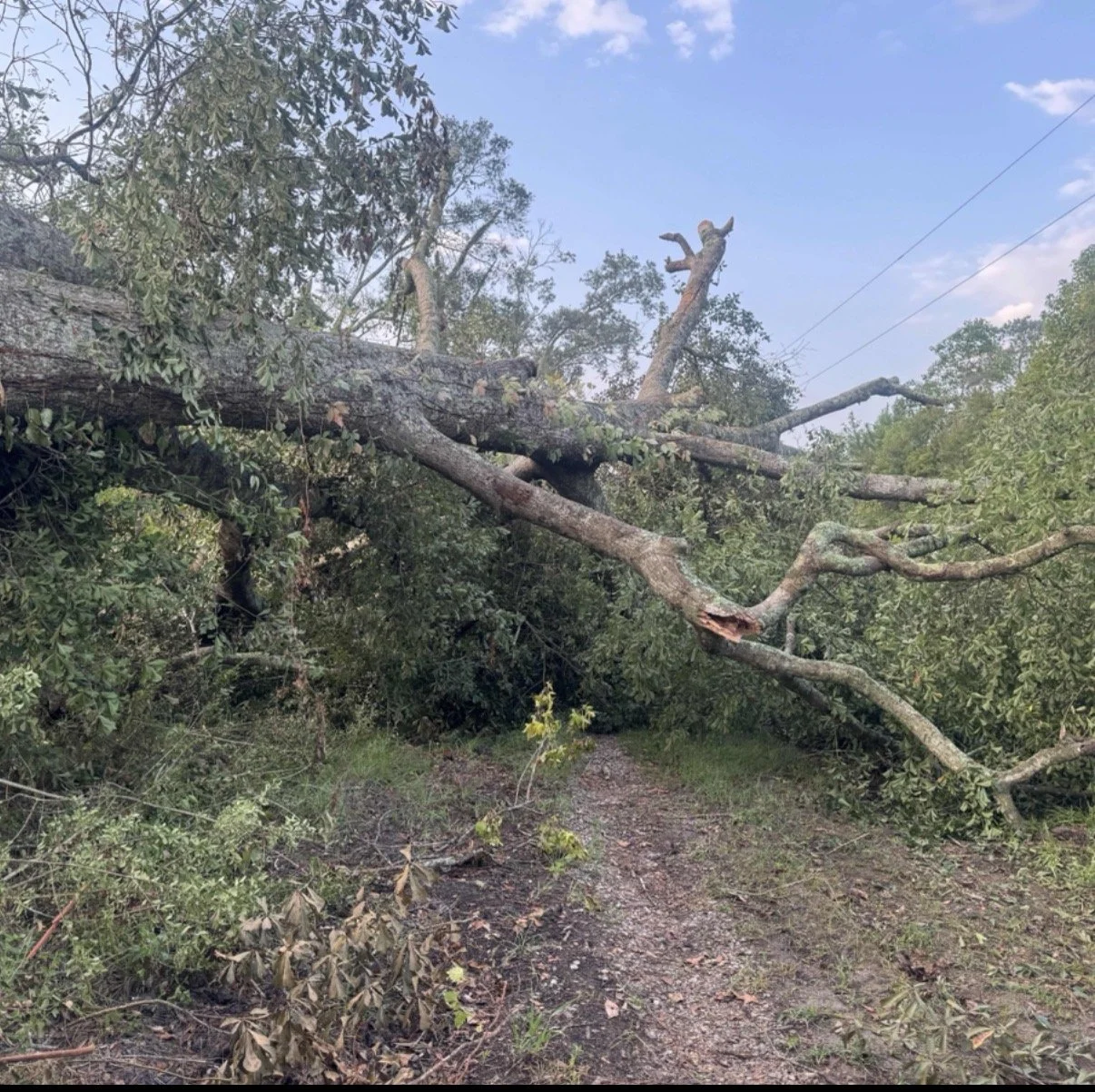
We ran into exactly that recently on a job out in the Clinton/Ethel area. A storm had come through and dropped a large tree straight across a homeowner’s driveway - big enough that it was taller than our own operator standing next to it, and it had snapped clean in half from the force of the wind. It’s the kind of damage that looks overwhelming if you’re standing there without the right equipment, but for us it’s routine work.
Why Storm-Downed Trees Are More Than a DIY Job
A fallen tree isn’t just in the way — it can be dangerous to deal with on your own. Trees that come down in storms are often still under tension from how they fell, which means cutting into them with a chainsaw without the right approach can be unpredictable. Add in the size of a lot of the trees on rural Louisiana properties, and it’s not something most homeowners have the equipment to move safely, even after it’s cut into pieces.
That’s where having the right gear makes the difference. With grapple attachments, excavators, and the saws to break a tree down into manageable sections, a job that could take a homeowner an entire weekend — or put them at real risk — becomes a same-day cleanup.
What We Handle
When a tree comes down on your property, whether it’s blocking a driveway, laying across a fence, or resting on a structure, we can:
• Cut the tree down into manageable sections
• Remove it from driveways, yards, or access roads
• Clear away limbs, brush, and debris left behind
• Handle stump removal if needed
This applies whether it’s one tree after a bad thunderstorm or larger cleanup after a hurricane moves through.
Serving South Louisiana Storm Cleanup Needs
We work throughout the area from Woodville, Mississippi down through Baton Rouge, Gonzales, Zachary, Clinton, and Jackson, Louisiana. Storm season doesn’t wait for a convenient time, and neither do we — if a tree comes down on your property, we’re a call away.
Need a tree removed from your property? Call or text Maggie at 225-715-9745, message us on Facebook, or reach out through our website.
We Put an Excavator on a Barge Last Week. Here's Why…
Most of what we do is dirt work you can drive to. Last week was different.
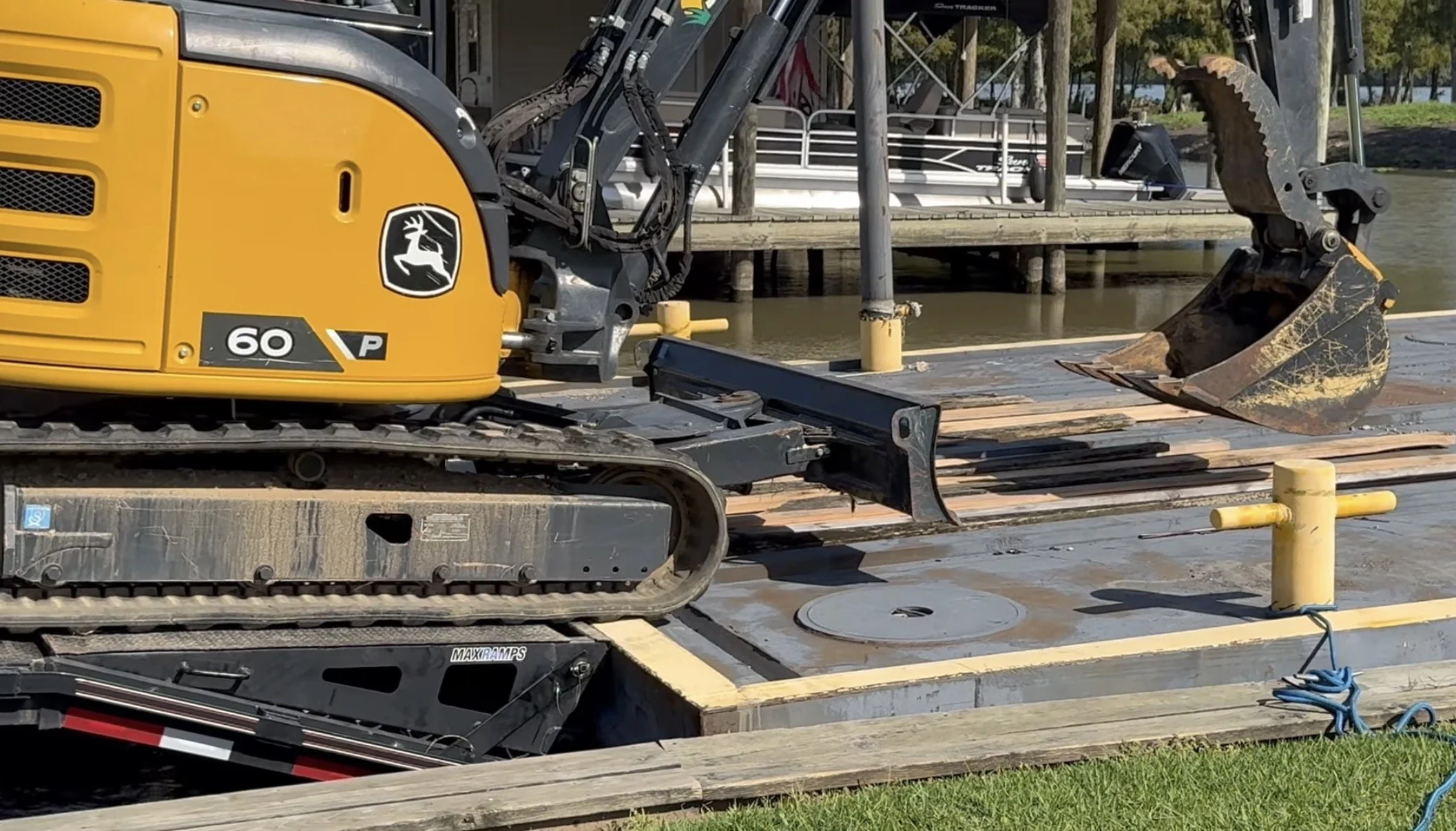
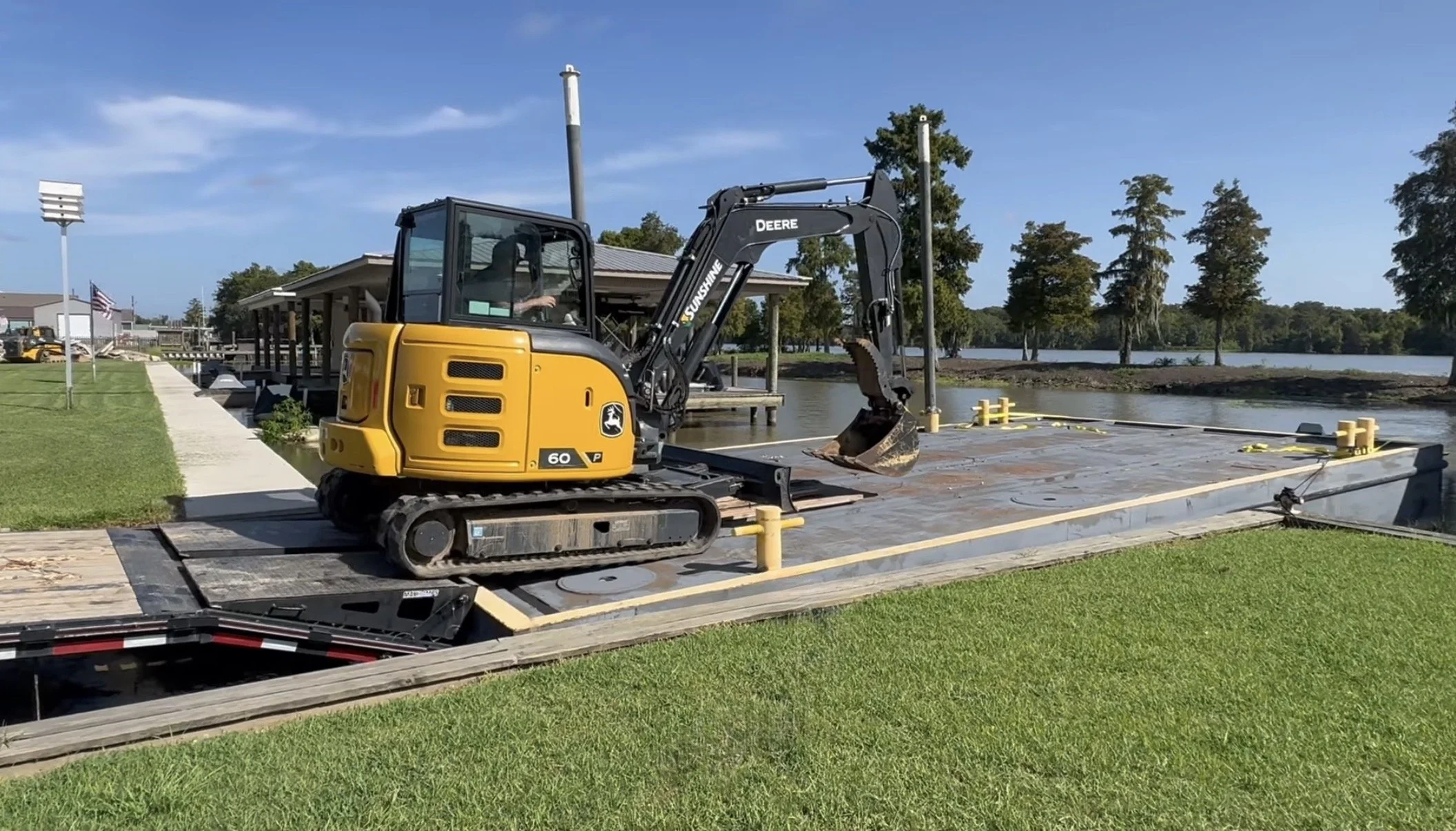
We loaded our John Deere 60 excavator onto a barge, backed a gooseneck trailer down a boat ramp, pushed the barge out, and hauled concrete out to a small island on Belle River near Pierre Part.
Most of what we do is dirt work you can drive to. Last week was different.
We loaded our John Deere 60 excavator onto a barge, backed a gooseneck trailer down a boat ramp, pushed the barge out, and hauled concrete out to a small island on Belle River near Pierre Part. The island already had some dirt work done on it, but without something to hold the bank in place, all that work was going to wash right back into the river. So we placed riprap around it — broken concrete stacked along the shoreline to break up wave action and current before it can eat away at the bank.
Couple days of work, and that island isn't going anywhere.
What riprap actually is
Riprap is just rock, broken concrete, or other heavy material placed along a shoreline, bank, or slope to absorb wave and current energy before it reaches the soil underneath. Instead of water hitting bare dirt directly, it hits rock first. The rock doesn't erode the way soil does, so the bank behind it stays put.
It's one of the most straightforward fixes there is for erosion — but it only works if it's placed right. Stack it wrong, leave gaps, or use material that's too light for the current in that spot, and you're just delaying the same problem.
Why this matters if you're on the water in South Louisiana
If your property touches False River, a bayou, a canal, or any other stretch of moving or wind-exposed water, you already know what erosion looks like. A bank that used to be a few feet from the water creeping closer every year. A seawall or bulkhead that's cracking or leaning. Grass that won't hold because the ground underneath it keeps sliding away.
That's not something that fixes itself, and waiting usually means more material, more cost, and more urgency by the time you get to it. Riprap is one of the more affordable ways to get ahead of it, especially compared to a full seawall or bulkhead rebuild.
Why the barge
A lot of waterfront erosion work doesn't have road access — you can't back a dump truck up to a riverbank that's mostly water and cypress trees. That's where the barge comes in. We can load equipment and material onto it, get it right up against the bank or out to an island like this one, and work from the water instead of trying to force a job into a spot that was never built for heavy equipment.
If your situation is "the problem area is basically only reachable by boat," that's not a reason to rule out getting it fixed. It's just a different way of getting the equipment there.
If you're seeing erosion on your property
A few signs it's worth having someone look at:
- The bank is visibly closer to a structure, road, or tree line than it used to be
- You can see undercutting - soil hollowed out beneath grass or root
- A seawall or bulkhead is leaning, cracking, or has gaps at the base
- Storms or boat wake seem to take a noticeable bite out of the bank each time
None of that means you need a massive project. Sometimes it's a stretch of riprap in the right spot. Sometimes it's more involved. Worth having someone take a look before it gets to the point where the fix is bigger than it needed to be.
If you're along False River, Belle River, or any other stretch of South Louisiana waterfront and want to know what it'd take to shore up your bank, reach out. [louisianalandpros.com](https://louisianalandpros.com) or text Maggie at 225-715-9745.